By Heather Leask
•
April 15, 2026
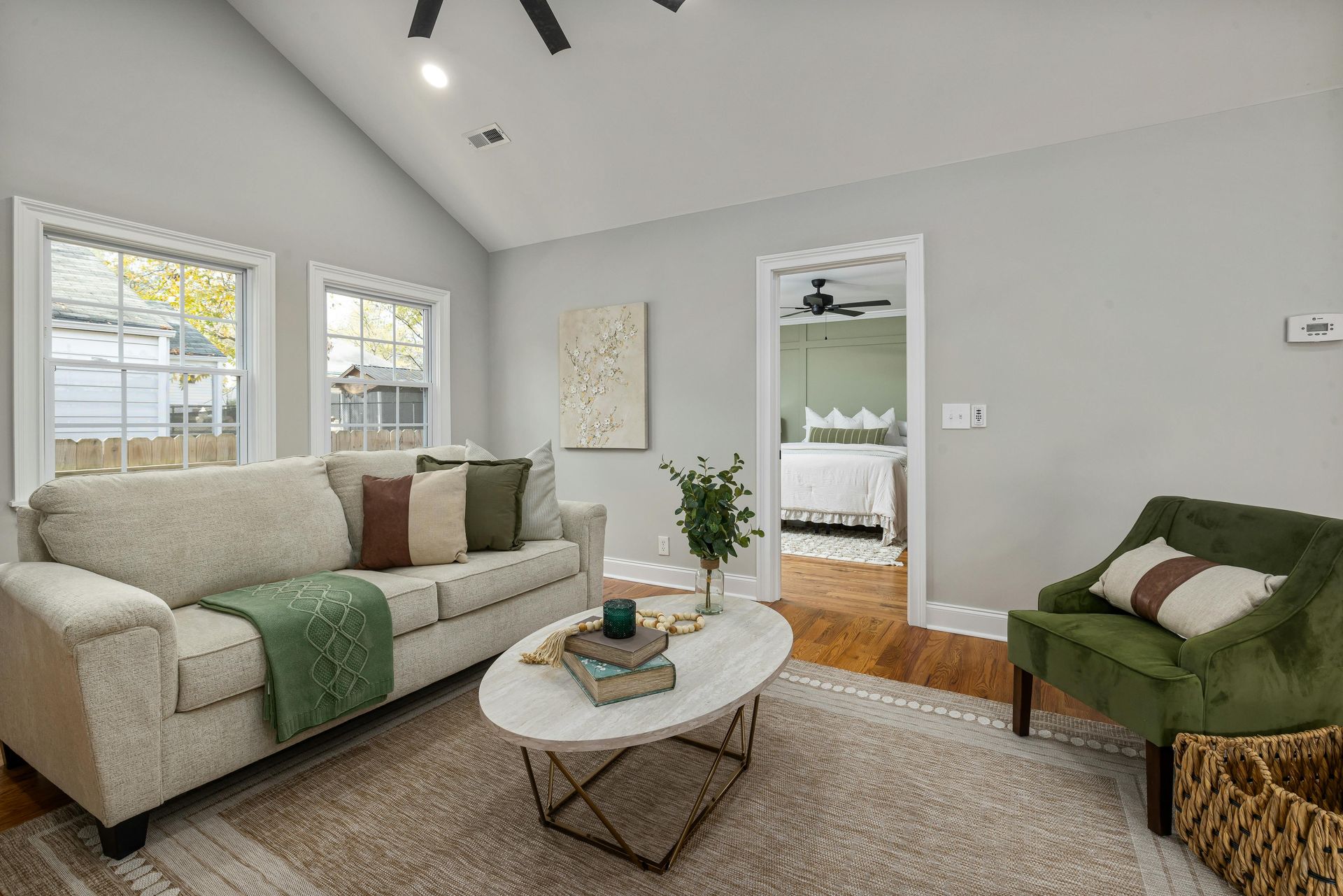
Home staging isn’t “just decorating”—it’s a marketing strategy that improves buyer perception, strengthens listing photos, and helps buyers emotionally connect with a home. National Association of REALTORS® (NAR) research shows staging makes it easier for buyers to visualize a property (83% of buyers’ agents) and is associated with higher offers (often 1%–5%, and sometimes 6%–10%) and reduced time on market. In Tucson—where listings are taking meaningful time to move (for example, Realtor.com’s Tucson CBSA series shows a median 57 days on market in March 2026)—staging can be the edge that helps you stand out online and avoid price reductions. Why staging matters Most buyers don’t “buy rooms”—they buy a feeling: livable, clean, bright, and move-in ready. NAR’s staging research consistently finds that staging changes how buyers perceive a home: in 2023, 58% of buyers’ agents said staging affects most buyers’ view of a home (and only 9% said it has no effect). Staging also affects the online-to-in-person funnel. In NAR’s 2023 report, buyers’ agents said staging made buyers more willing to tour a home they saw online (40%)—a direct tie to stronger showing activity. That matters because sellers increasingly value presentation tools that improve digital shopping—high-resolution photos, floor plans, and virtual tours. Zillow’s Consumer Housing Trends work shows 71% of sellers are more likely to hire an agent who offers virtual tours and/or interactive floor plans, and 78% are more likely to hire an agent who provides high-resolution photography. In other words: staging improves the product and the marketing assets (photos/tours) that drive clicks, showings, and offers. Light staging vs full staging: what’s the difference? Most Tucson homes don’t need “designer-level” staging everywhere. The goal is to choose the level of staging that matches your home’s condition, price point, and competition. Light staging typically means: decluttering, deep cleaning, neutralizing décor, small repairs, simplifying furniture layouts, and adding a few “finishing touches” (pillows, towels, greenery). Full staging typically means: bringing in a staging company and (often) rented furniture/accessories—especially helpful for vacant homes or homes with awkward layouts. NAR data gives a useful benchmark for cost expectations: in the 2025 Profile of Home Staging, the median staging cost was $1,500 when using a staging service versus $500 when the listing agent handled staging. Redfin’s consumer guidance similarly notes an average staging cost around $1,800, with a common range of $1,000–$7,000 depending on scope and home size. Light vs full staging comparison Light staging (owner-occupied, using existing furniture)NAR median $500 when agent stages Often aims to support stronger offers by improving buyer perception; NAR reports many agents see 1%–5% offer lift when homes are staged Often can be completed quickly once prep is done (commonly hours to 1–2 days for occupied installs) NAR: 30% of sellers’ agents saw slight time-on-market decreases; staged homes also show reported offer increases (commonly 1%–5%) Full staging sellers’ agents reported 1%–5% increases (19%) and 6%–10% increases (10%) in the value offered when homes were staged Vacant staging can require planning + install windows (often about 7–14 days depending on availability/scope) NAR: 30% saw slight DOM decreases and 19% saw great decreases; higher offer amounts are also reported more often in staged vs similar unstaged comparisons What the data says: price, timing, and buyer psychology NAR’s 2025 research found: 83% of buyers’ agents say staging makes it easier for buyers to visualize the home as their future home. Sellers’ agents reported value lifts after staging: 19% saw 1%–5% higher offers, and 10% saw 6%–10% higher offers vs similar unstaged homes. On speed: 30% of sellers’ agents observed slight reductions in time on market when homes were staged, and 19% observed a great reduction. NAR’s 2023 report reinforces the same pattern: 81% of buyers’ agents said staging made it easier for buyers to visualize the home. 20% of buyers’ agents said staging increased offers by 1%–5% compared with similar unstaged homes. The median staging spend then was lower ($600 via staging service, $400 when agent-staged), highlighting that staging can be scaled to budget. A practical way to think about the math: Tucson’s median sale price was about $310K in February 2026 on Redfin’s city trend page. A 1%–5% improvement is $3,100–$15,500—often far more than typical staging spend, while also potentially reducing carrying costs tied to longer time on market. (Results vary by home and market—staging isn’t a guarantee, but the risk/reward can be compelling.) Practical Tucson staging tips that actually move the needle If you only do a few things, focus on the items agents most commonly recommend and the rooms buyers care about most. Start with the “big three”: declutter, clean, curb appeal. In NAR’s 2025 staging research, agents’ most common recommendations were decluttering (91%), whole-home cleaning (88%), and improving curb appeal (77%). Stage the highest-impact rooms first. NAR data shows buyers prioritize the living room and primary bedroom, with the kitchen close behind. Optimize for Tucson light. Keep window coverings minimal, clean glass/screens, and use warm-neutral tones that photograph well in bright desert sunshine (harsh contrast can make rooms feel smaller in photos). Reduce “visual temperature.” Tucson buyers often react strongly to “move-in ready” cues—fresh, neutral paint touch-ups, clean baseboards, and simplified surfaces. NAR notes paint touch-ups and painting walls are frequently recommended prep items. Align staging with your marketing package. Sellers value floor plans, virtual tours, and high-quality imagery—and staging makes those assets more persuasive. With Tucson listings taking time to sell, presentation can be the difference between “just another listing” and a home buyers feel they must see in person.